


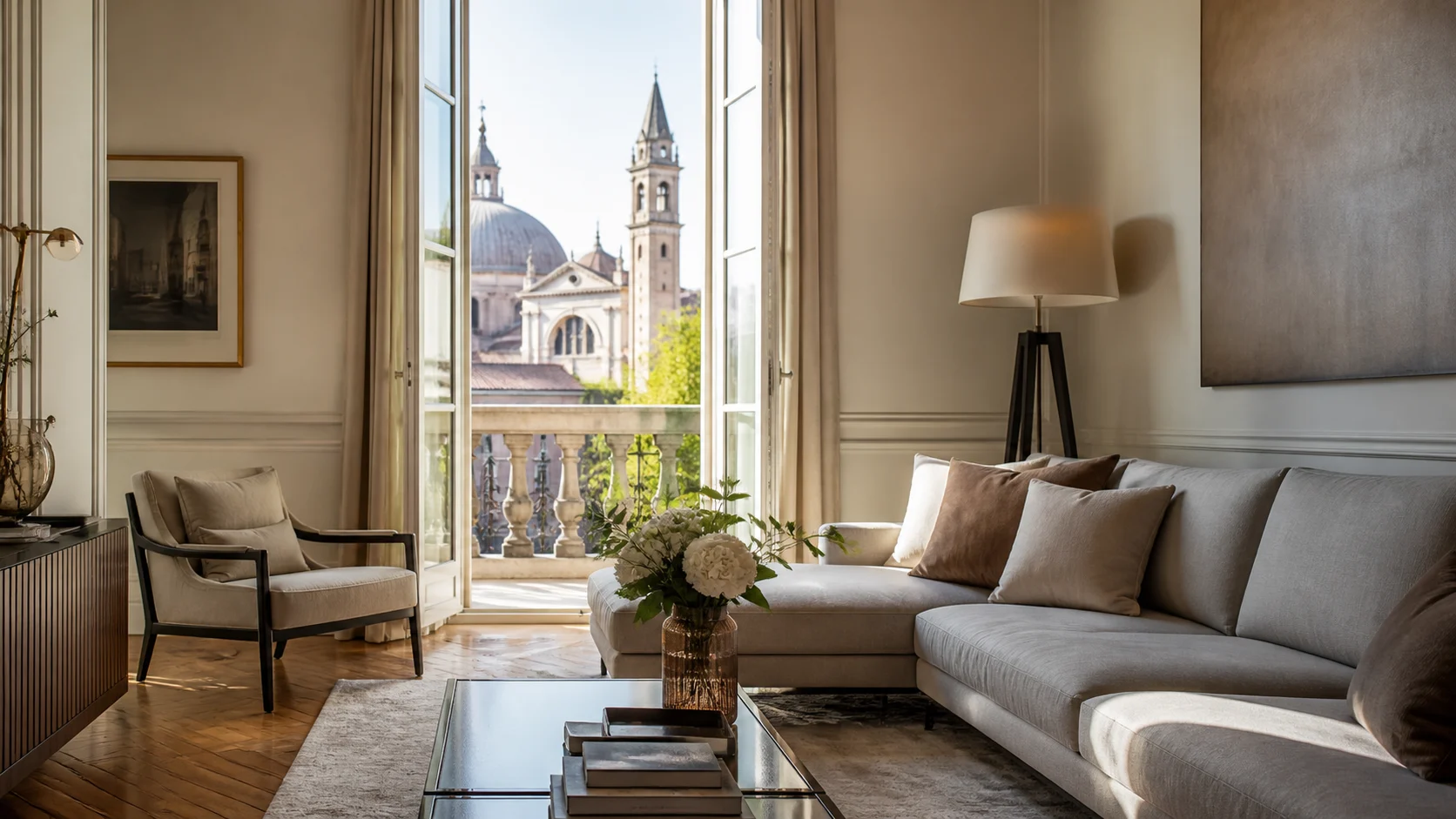
And unlike Milan or Rome, you can actually afford to live here well.
At Tailor Homes, we specialise in furnished apartments for short and medium-term stays in Padova. We’ve helped students, researchers, expats, and professionals get settled here from across Europe and beyond. This guide collects everything we’ve learned from those conversations.
Why People Move to Padova
Most people arrive in Padova for one of three reasons: the university, work, or as a base for exploring Veneto. What tends to happen is they arrive for one of those reasons and stay much longer than planned — or come back.
The University of Padova (Università degli Studi di Padova) is one of Europe’s oldest and most prestigious universities. It consistently ranks in the top 10 universities in Italy and top 250 globally. It has a significant international programme, with Erasmus+ partnerships across Europe and degree courses delivered in English across a growing range of disciplines including engineering, medicine, economics, and the sciences.
For professionals, Padova is the hub of the Veneto economic region — one of Italy’s strongest. The city has significant clusters in manufacturing, biomedical research, agri-food, and logistics. Companies including Camozzi, Finco, and a cluster of mid-sized family industries draw professionals on project-based assignments throughout the year. The proximity to Venice’s international airport (Marco Polo, 45 minutes) makes European travel easy.
Finding a Place to Live in Padova
This is where most newcomers struggle. The Padova rental market is competitive — particularly in September and October when the new academic year begins. Available properties move fast, and the best ones go within days.
Your main options are:
What Tailor Homes offers. Move-in ready, all bills included, full management. Best for anyone who wants a professional, hassle-free base from day one. Available from 30 days upward.
Longer contracts (typically 12+ months), unfurnished or partially furnished, Italian language contract. More complex for non-Italian speakers. Requires a codice fiscale, bank account, and references.
Run by the university’s ESU (Ente Regionale per il Diritto allo Studio). Very limited availability, requires application and income criteria. Good if you qualify; difficult if you don’t.
Renting a room in a shared apartment. Available on Idealista, Subito, and local Facebook groups. Lower cost but requires independent searching and dealing with private landlords in Italian.
Our honest advice: if you’re arriving from abroad and need to be operational quickly, a managed furnished apartment is almost always the right choice for your first stay — even if you eventually transition to the private market for a longer lease. The time you save and the stress you avoid in the first month is worth the cost difference.
Cost of Living in Padova (2026)
Padova is considerably more affordable than Milan (roughly 30–35% cheaper) and broadly comparable to Bologna or Turin. Here’s a realistic monthly budget for a single person:
Students sharing an apartment will typically spend considerably less — a comfortable student budget in Padova is around €800–1,100 per month total, including a shared room, food, and all expenses.
Getting Around Padova
Padova is unusually easy to navigate. The historic centre is compact and largely pedestrianised. Cycling is the dominant mode of transport — Padova has a well-developed network of cycle lanes, and the flat Veneto landscape makes it practical in every season. Nearly every medium-term resident buys or rents a bike within the first week.
For longer distances, the tram line (SIR1) runs from Pontevigodarzere in the north through the city centre to Guizza in the south, passing the train station, Prato della Valle, and the hospital. It’s fast, frequent, and reliable. Standard buses cover the rest of the network. A monthly public transport pass costs around €40–55.
Padova Centrale station is excellent. Direct trains to Venice run every 15–30 minutes (25–30 min journey). Vicenza is 20 minutes, Verona 45 minutes, Bologna 1 hour, Milan 1.5 hours. The city is genuinely one of the best-positioned in Italy for regional exploration.
What to Do and See in Padova
Padova is densely packed with cultural heritage. The Cappella degli Scrovegni — Giotto’s 14th-century fresco cycle — is one of the most important works of Western art. Visits must be booked in advance and spaces are very limited, so book as soon as you arrive. The Musei Civici agli Eremitani next door is exceptional and often overlooked.
The Basilica di Sant’Antonio is a pilgrimage site of genuine beauty and architectural complexity — worth visiting on a quiet morning, not just as a tourist stop. The Orto Botanico, the world’s oldest academic botanical garden (founded 1545), is a UNESCO World Heritage Site and a calming place to spend a Sunday afternoon.
The market piazzas of Erbe, Frutta, and Signori form the social heart of the city. The morning market is exceptional for fresh produce. Padova’s food culture leans heavily on Veneto tradition — baccalà mantecato, bigoli in salsa, local Colli Euganei wines, and one of Italy’s great coffee cultures.
Practical Steps When You Arrive
Codice Fiscale
You’ll need this Italian tax code for almost everything — renting, banking, registering at the university, signing a phone contract. Get it from the local Agenzia delle Entrate (tax office). It’s free and takes about 20 minutes. Bring your passport.
Residency Registration (Residenza)
If staying more than 90 days as a non-EU citizen, you must register at the local municipality (Comune di Padova, Anagrafe office). EU citizens should do so within 3 months of arrival. Your property manager can advise on the specific documents required.
Italian SIM Card
Buy one at any phone shop or supermarket (TIM, Vodafone, and WindTre are the main networks). You’ll need your passport and codice fiscale. Reasonable data plans start at around €10–15 per month.
Banking
For medium-term stays, a local bank account isn’t essential but it’s useful. Alternatively, a Revolut or Wise account with a European IBAN works well for daily transactions and is widely accepted.
Moving to Padova? We’ll make it easy.
Fully furnished apartments. Bills included. Local support from day one. Available from 30 days.
See Our Properties →