


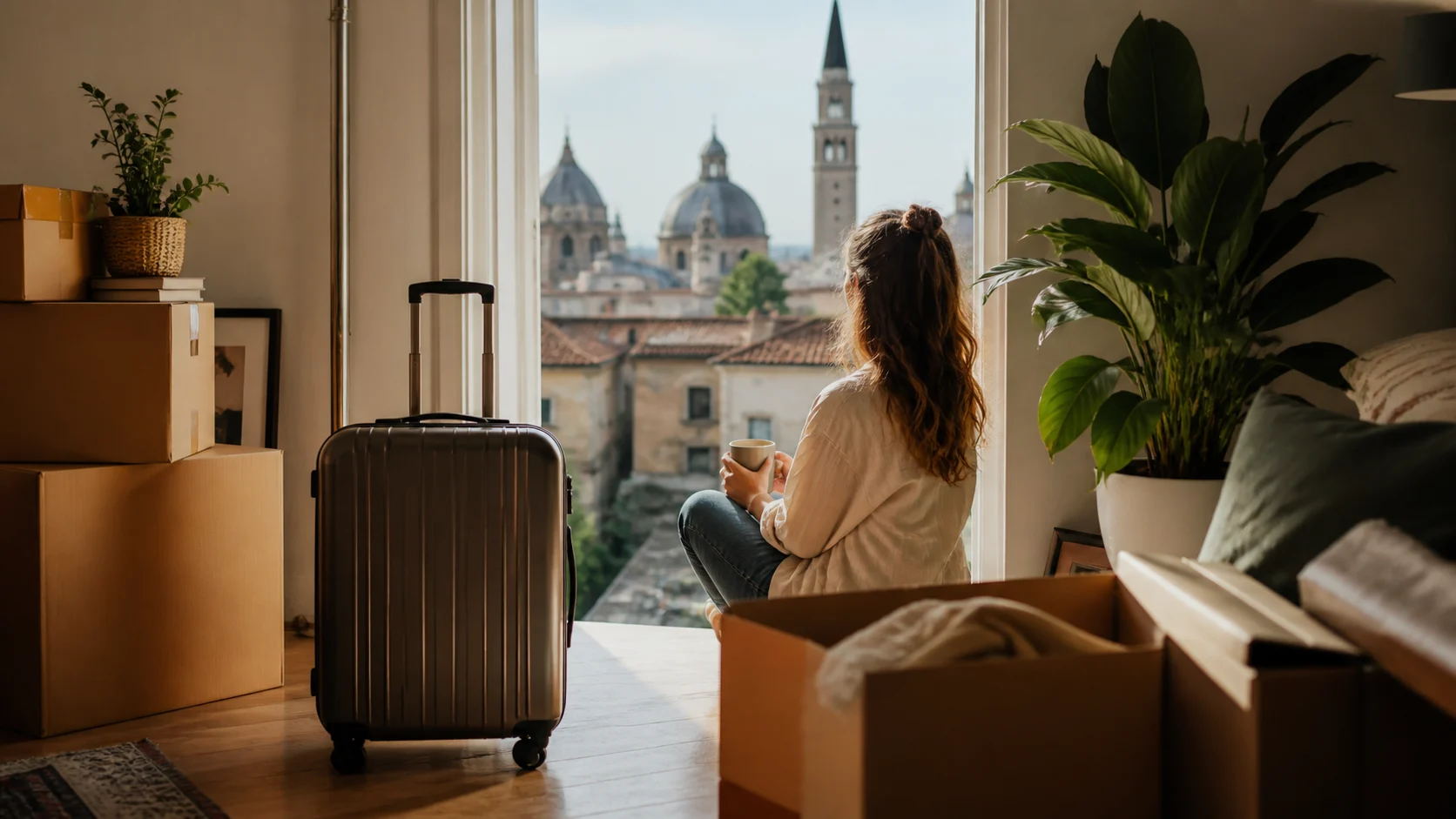
At Tailor Homes, our entire team lives here. We’ve watched dozens of guests arrive intending to “see Padova in a day” and end up extending their stays. This is what we tell them — what to see, when to go, and what most guidebooks get wrong.
The Essential Sights
If you do one thing in Padova, do this. Giotto’s fresco cycle, painted between 1303 and 1305, depicts the lives of Mary and Christ in 39 panels and changed the course of European painting. Photographs do not prepare you for the chapel’s vivid blue ceiling and the human warmth of the figures.
You’re given 15 minutes inside, preceded by a 15-minute climate-controlled antechamber. It feels short — but you’ll understand why the moment you step in.
The “Basilica del Santo” draws around 5 million visitors a year, making it one of the most visited churches in Italy. The eight Byzantine-style domes, the Donatello altar bronzes, and the chapel containing the saint’s tomb are all extraordinary — but the Basilica’s true atmosphere is felt early in the morning, when pilgrims arrive in silence and the side chapels are still empty.
Don’t rush. Spend 45 minutes inside. The Cappella del Tesoro behind the high altar holds the relics, including (famously) the saint’s incorrupt tongue.
At 88,000 square metres, this is one of the largest squares in Europe — an elliptical island ringed by 78 statues and a moat of water. It’s Padova’s living room. Saturday mornings bring an enormous market; the third Sunday of each month brings the antiques fair. Otherwise it’s where the city comes to walk, run, sit, and watch the day pass.
Founded in 1545, this is the oldest academic botanical garden in the world still on its original site. Its sixteenth-century circular layout has barely changed. Inside is “Goethe’s palm” — a Mediterranean fan palm planted in 1585 that the German poet wrote about in 1786 — and a modern climate-controlled biosphere with five distinct ecosystems.
The Squares: Padova’s Living Room
The three connected piazze in the centre — Piazza delle Erbe, Piazza della Frutta, and Piazza dei Signori — are the social heart of Padova. They’ve been a daily market since the Middle Ages and remain one today: produce in the morning, café tables in the afternoon, spritz hour from six. Walking through them at different times of day is the single best way to feel the rhythm of the city.
Between Erbe and Frutta sits the Palazzo della Ragione, with its enormous medieval hall (the largest covered hall in Europe at the time of construction in 1218) painted with one of the most complete astrological fresco cycles to survive from the Middle Ages. Below it, the Sotto il Salone covered market is one of the oldest continuously running food halls in Europe — wedge-shaped narrow corridors lined with butchers, cheese shops, and salumerie.
Piazza dei Signori, just a few steps further, is dominated by the fifteenth-century Torre dell’Orologio — one of Italy’s first astronomical clocks, displaying not just hours but moon phases and zodiac signs.
The University: Galileo Lectured Here
The University of Padova was founded in 1222 and is the second-oldest in Italy. Galileo Galilei taught here for eighteen years, calling them the happiest of his life. The historic centre of the university is Palazzo Bo, on Via VIII Febbraio, which houses the world’s first permanent anatomical theatre (1594) — a steep wooden amphitheatre where students once watched dissections by candlelight.
Guided tours of Palazzo Bo run several times a day in Italian and English. You’ll see the Aula Magna (where graduations still take place), Galileo’s lectern, and the anatomical theatre itself. It’s quieter and stranger than the Scrovegni — and tells you a great deal about what made Padova matter intellectually for so long.
The Quieter Pleasures
The Jewish Ghetto
The narrow streets between Via San Martino and Via dell’Arco form what was, until 1797, the Jewish quarter — established in 1603 and still architecturally distinct. Today it’s one of the most atmospheric corners of the city: tall narrow houses, antique shops, small bacari (wine bars), and one of Italy’s oldest functioning synagogues. The Jewish Museum gives the historical context.
Caffè Pedrocchi
The “café without doors” — open 24 hours from 1831 until the Second World War, hence the name. Three salons in three colours (red, white, green — the Italian flag). Order the caffè Pedrocchi, a signature espresso with mint cream. The upper floor houses the Museo del Risorgimento, a small but excellent museum of nineteenth-century Italian history.
The Orto Botanico’s secret twin
Less known than the main botanical garden is the Giardino della Biodiversità, the modern climate-controlled biosphere added in 2014. Five linked greenhouses recreate ecosystems from tropical rainforest to arid desert — fascinating in any weather but particularly welcome in winter.
The arcades
Padova has the densest network of covered arcades (portici) of any city outside Bologna — around 25 km of them. They’re not a tourist attraction in themselves, but they shape the experience of walking the city. You can cross most of the centre in heavy rain without opening an umbrella.
Spritz, Cicchetti, and the Aperitivo Ritual
Padova claims to have invented the spritz, and certainly perfected it. The Aperol-and-Prosecco version that’s now ordered in London and New York started here. From around 6pm, the squares fill — Piazza delle Erbe, Piazza della Frutta, Piazza dei Signori — and the spritz comes with cicchetti: small bites of cured meats, cheeses, polenta and seafood, the Veneto’s answer to Spanish tapas.
Three places worth knowing about, all within a five-minute walk of each other:
All’Ombra della Piazza (Via Pietro d’Abano) — small, atmospheric, the cicchetti counter is famously good. Bar Nazionale (Piazza delle Erbe) — older, more traditional, perfect when the weather is good and you can sit outside in the shadow of the Palazzo della Ragione. Enoteca Severino — the city’s oldest enoteca, going back to the early 1900s, for serious wine.
For something more substantial, Bacaro Frascoli (Via dei Tadi) does Venetian-style cicchetti and small plates that are a genuine alternative to a sit-down dinner.
What’s Worth Skipping
A blog about a city is more useful when it’s also honest about what isn’t worth your time.
The Hop-on Hop-off bus exists but the centre is so compact and walkable that it’s mostly unnecessary. Specola Observatory is interesting if you have specific interest in the history of astronomy, but it’s a long walk and the view is not its main draw. The Padova Card bundle ticket is only worthwhile if you’ll visit four or more participating sites in a single visit — most short-stay visitors won’t.
When to Visit
April–June and September–October are ideal: warm but not the suffocating Po valley summer, and the spring or autumn light is at its best in the squares. July and August are hot (often 32–35°C) and a small share of restaurants close for ferie. November–February is misty, atmospheric and significantly cheaper, with no queues at the major sights — but the Orto Botanico has reduced winter hours and some side-street restaurants close on Sundays.
The big dates worth checking: 13 June (Festa di Sant’Antonio — Padova’s biggest religious festival, the city is busy with pilgrims), and the Padova Comics convention in spring (autumn for the trade fairs). If your dates coincide with these, book accommodation early.
How to Get the Most Out of It
Two pieces of advice that change visits more than any single sight:
Stay overnight. Most people visit on a day trip from Venice and miss the city’s best hours — the evening passeggiata, the spritz crowd in the squares, the basilicas at first light. Even one night transforms the experience.
Walk slowly. Padova is layered — every facade, every portico, every side-street has something. The city rewards slowness in a way Venice (overwhelmed by visitors) and Verona (more concentrated) do not. The point is not to tick off a list. The point is to feel an Italian city working at its own pace.
Make Padova your base for a few nights — or a few months.
Fully furnished apartments in the historic centre and beyond. Short stays from one night, monthly rentals from 30 days. Local team, available always.
See Our Apartments →